COMMENTARY
BY GABRIEL OKECHUKWU
The Challenge at hand:
The housing landscape in Rivers State—particularly within its bustling economic epicenter, the Port Harcourt-Obio/Akpor axis—has reached a critical juncture.
As a primary hub for the nation’s oil and gas sectors, Rivers State naturally attracts a massive influx of professionals, traders, and labourers.
However, this economic magnetism has outpaced infrastructural expansion, transforming a standard urban planning challenge into a full-blown housing affordability crisis.
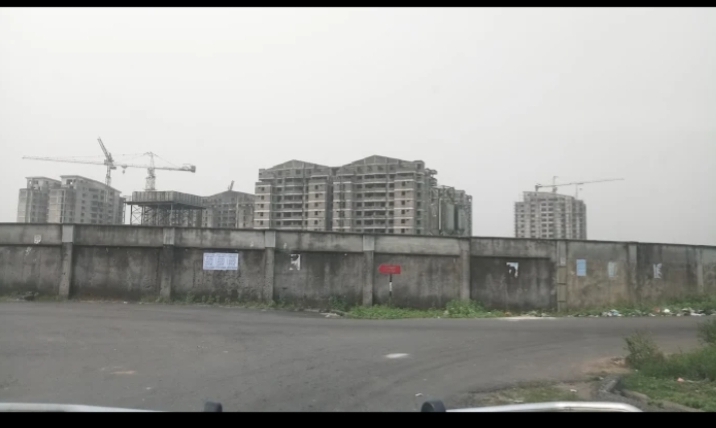
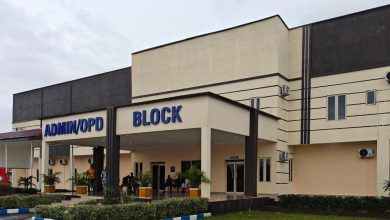
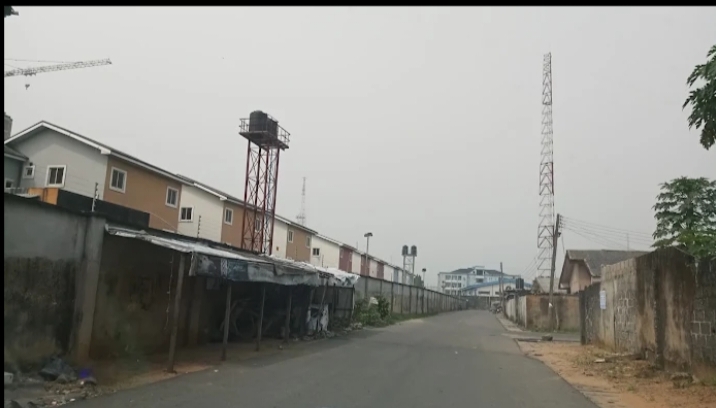
IMAGES FROM ABANDONED RAINBOW TOWN HOUSING ESTATE TRANS AMADI PH
The crisis in Rivers State’s housing market stems from a combination of economic, regulatory, negligence and geographical pressures.
The gap between what average residents earn and what landlords demand has widened significantly.
Recent data from the National Union of Tenants of Nigeria (NUTN) highlights that a substantial segment of low- and middle-income earners spend an unsustainable percentage of their income on rent.
For instance, a standard single-room apartment has risen toward one hundred and eighty thousand Naira per annum, while a Self-contained apartments average eight hundred to nine hundred thousand Naira depending on the area; not to mention one or two bedroom flats.
If this is Compared to the national minimum wage of of seventy thousand Naira a month, amounting to a little above eight hundred thousand annually, it then means that a basic self-contained unit costs more than an entry-level worker’s entire yearly salary, excluding other necessities and responsibilities.
CAUSATIVE FACTORS
Available residential spaces are actively shrinking. Landlords frequently convert residential buildings into commercial properties (offices, boutiques, or short-let apartments) to chase higher profit margins.
This artificial contraction of supply, combined with a highly unregulated network of estate agents charging steep, arbitrary “agency, drinking money, caution, lawyers and agreement” fees, which astronomically inflate the entry cost of securing a home.
Geography plays a major role in Port Harcourt’s housing deficit.
The state’s low-lying, coastal terrain makes it highly susceptible to seasonal flooding.
During heavy rainy seasons, entire communities face displacement and structural damage, destroying existing housing stock and forcing affected families into an already saturated rental market.
Acquiring land with a secure title, such as a Certificate of Occupancy, C of O, remains slow and expensive if not elusive.
Worthy of mention here also is ever rising costs of imported building materials, (cement, iron rods, and finishes), in addition to high mortgage interest rates where it exists; since private developers prioritize luxury and high-end residential estates over affordable housing models, to guarantee their returns.
Bridging the housing gap in Rivers State requires shifting away from piecemeal real estate developments and moving toward coordinated policy and structural reforms and intentional long term planning.
There is urgent need for departure from the old method of public private partnership, PPP, scheme if any meaningful success is to be achieved.
The reason is simple, the Rainbow Housing Estate started by former Rivers State Governor, Dr. Peter Odili’s administration and inherited by Chibuike Amechi in Trans Amadi, was abandoned due to poor funding and disagreement with developers; even the Housing Estate the present administration has undertaken through PPP along Obiri – Ikwere Airport axis, also seems beyond the reach of average income earners.
THE ROAD MAP
Without mincing words, both Rivers State Government and the twenty three Local Governments Areas in the state can comfortably end the housing deficit if so determined.
It is long overdue to try new methods such as Build and Hand over Module: this concept entails the state Government and Local Government councils embarking on Housing Estate projects , complete the projects and hand over to a private entity or agency of government to manage within Government controlled rentage, as source of revenue.
Another method that would be beneficial is occupier – Owner Module, specifically for civil servants.
In this module , Government also finishes the project and gives it out to civil servants through a government agency with agreement that the cost of acquiring the building or apartment would be settled through monthly or yearly rent.
In that regard, the rent forms part of the payment of the property, which may equally include payment of certain percentage of lump sum, to meet up pay- back tenure; the occupant takes ownership at the completion of payment, deducted from the monthly salaries of the individuals involved.
Rent is skyrocketing in Rivers State simply because Government is not intentional about Housing, it only pays lip service to such critical human need being goal number eleven in Sustainable Development Goals SDGs, of United Nations, targeting adequate and affordable housing for all by Twenty – Thirty.
For that reason, private individuals who build their own houses, just increase or fix arbitrary rents at wish to maximize profits.
But the fact remains that lack of money is not the major factor preventing Rivers State Government or Local Government Councils from building, rather lack of political will,a purpose and planning.
Judging by available records, Rivers State is rich enough to stamp out Housing challenges facing the state.
The administration of former Rivers State Governor, Nyesom Wike was declaring about thirteen billion Naira as monthly Internally Generated Revenue, IGR, while the present administration of Siminalayi Fubara has raised the bar, upto at least, twenty five billion Naira monthly IGR; and every Local Government Area getting about one billion Naira allocation every month.
During Nyesom Wike’s tenure, he built about twelve flyovers at average cost of seven billion Naira, but no single low cost Housing Estate was completed and given out to the public under government controlled rentage, except the ones for Judges just as Governor Fubara has equally done for permanent Secretaries.
The State government needs to earmark at least one month IGR every year and strategically plunge it into Housing, they can even combine the sum for two or three years and make the project massive at different parts of Port Harcourt City, the effects will be far-reaching in two to four years and going forward.
In the same vein, the Local Government Areas that are within places affected by urban Migration, such as Obio/Akpo, Port Harcourt City, Eleme, Oyigbo, Ikwere, Okrika need to equally embark on Housing project to reduce the chase of few available houses by residents of the State.
Interestingly, the Housing project is a long time investment for both the State Government and Local Government Councils, because the project will continue to generate revenue through the rents effortlessly in addition to reducing the incessant clashes between residents and self acclaimed “task force” groups trying to generate revenue, especially for the Local Government Councils.
To curb the immediate pressures on tenants, the state needs robust regulatory intervention; Implement strict moratoria on converting residential structures to commercial spaces in high-density areas.
The State also needs to formalize and register property agents to eliminate predatory pricing and extortionate hidden fees.
There is need to Establish a state-backed digital property registry to monitor rent indices and prevent arbitrary, cut-throat hikes.
Port Harcourt and Obio/Akpor are choked because infrastructure is concentrated heavily within their boundaries.
By expanding high-quality road networks, modern transport systems, and public utilities into surrounding local government areas—such as Ikwerre, Oyigbo, and Etche—the government can naturally de-congest the capital city, making suburban living a viable, cheaper alternative for workers.
Conclusively, housing crisis in Rivers State is ultimately less about a lack of physical space and more about a lack of affordable, regulated options, political will and visionary planning.
Resolving it demands a balance between free-market real estate and active social welfare planning as well as intentional commitment cum determination of both State and Local Government Councils.
If the state government and Local Government Areas, lunch into Housing projects effectively and streamline land titles, clamps down on predatory rental practices, provide infrastructural anchors for new suburbs, Rivers State can transform its real estate sector from a source of financial strain into a genuine engine of equitable economic growth.